
Guides
6 min readUpdated
Plastic glazing is a product and system decision, not a shortcut based on toughness. Separate temporary protection from a permanent change to the entrance.
At a glance
- Temporary securing and permanent material substitution are different decisions.
- Appearance and thickness do not establish a suitable replacement.
- Confirm the opening, product documentation and applicable project requirements.
Plastic sheet is not an automatic replacement for entrance glass
Some acrylic and polycarbonate products are intended for glazing, but neither material can be accepted as a direct replacement simply because it is clear, tough or available in the right thickness. A permanent substitution needs an identified product, suitable framing and documented performance for the actual entrance. Temporary protection of a broken opening is a separate decision with its own restrictions.
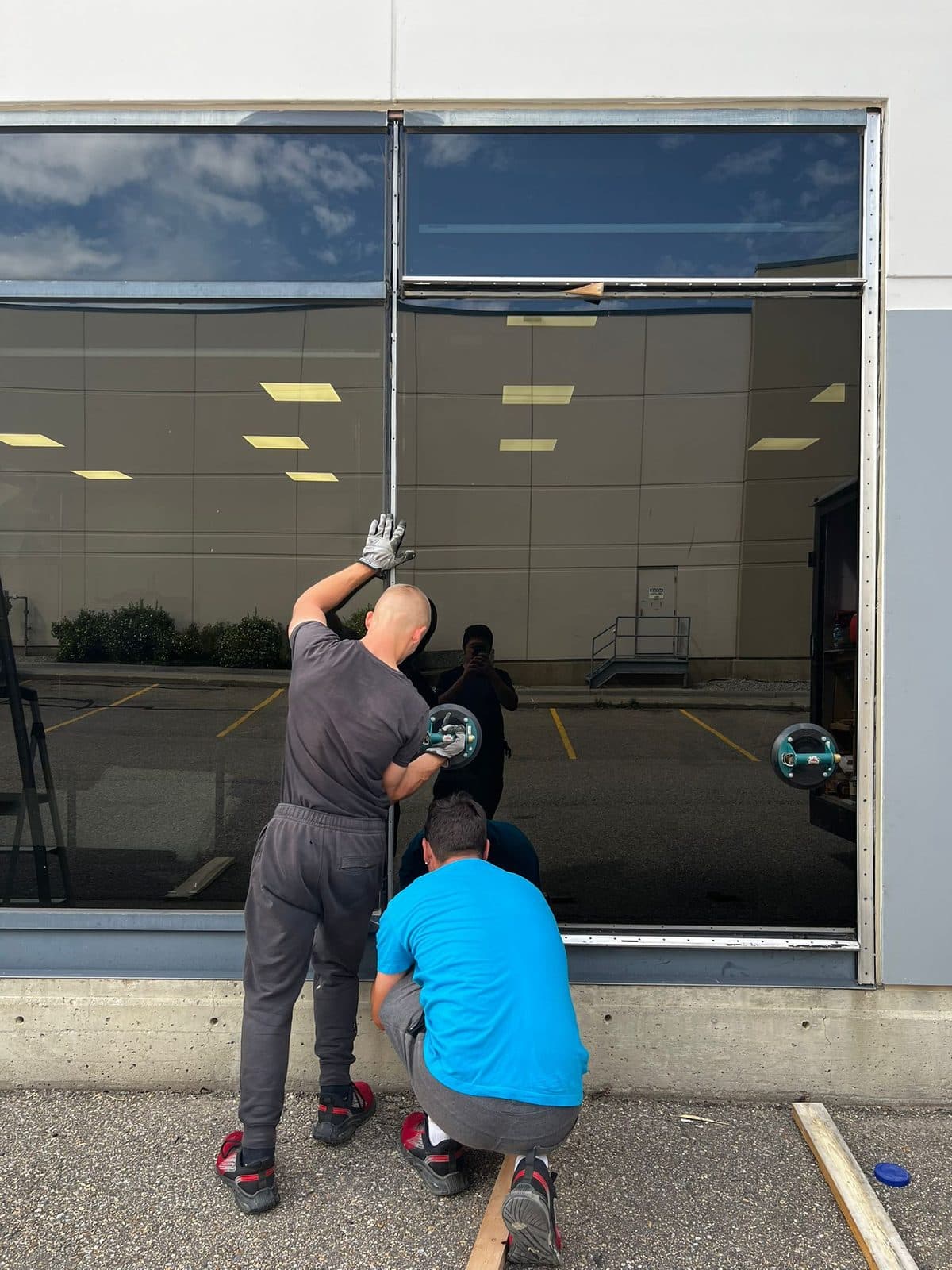
Keep people clear of broken or unstable glazing and notify the responsible property contact. Do not fit a loose sheet, remove remaining glass or operate a damaged leaf to see whether a substitute will work. Our commercial glass repair service assesses the glass, retaining system and surrounding damage before the permanent scope is agreed.
First decide which job the proposed sheet is meant to do
Temporary protection addresses the exposed opening while the permanent repair remains pending. The record should identify what was secured, whether the affected door remains restricted and who coordinates access. Calling a sheet temporary does not establish that it is suitable protection or that people can use the entrance normally.
Permanent glazing becomes part of the entrance's continuing construction. It needs a complete specification, including the selected grade, retaining arrangement and applicable project requirements. A temporary panel remaining in place longer does not acquire that specification through continued use.
Ask whether the proposal concerns fixed glazing beside the door, an insert within a framed leaf, or the moving leaf itself. Evidence for a framed window sheet does not establish a replacement for a glass leaf carrying door fittings. If the objective is to restore the existing storefront glazing, storefront glass replacement connects the glass order with the frame and retention assessment. This guide does not establish a plastics installation service.
Compare acrylic and polycarbonate as named products
A material name leaves important differences unanswered. Acrylic and polycarbonate are different materials; each also comes in different grades and surface treatments. Avoid replacing that detail with a broad claim that plastic is stronger than glass.
The manufacturer's ACRYLITE acrylic-versus-glass comparison separates impact behaviour from stiffness. It describes acrylic as less stiff than glass and warns that substitution can require design changes or be infeasible. An impact-strength comparison is not evidence that an equally thick sheet will deflect like the original glass.
For polycarbonate, the TUFFAK AR data sheet identifies a particular hard-coated grade, with coating on one or both sides. Its abrasion, chemical and weathering descriptions belong to that product. They should not be assigned to an unidentified uncoated polycarbonate sheet.
The practical comparison is therefore the exact acrylic proposal against the exact polycarbonate proposal and the existing requirement. Record the grade, thickness, coated faces and intended application. A generic choice between two material names cannot resolve those differences.
Check movement and retention together
A sheet needs space to move while remaining adequately engaged in its receiving frame. Making it fit tightly is not the same as establishing a suitable retaining detail.
The ACRYLITE glazing guide, September 2024, addresses expansion from temperature and moisture, wind deflection and sash design for its extruded acrylic. These considerations make copying the old glass dimensions an incomplete substitution method.
Plaskolite's TUFFAK fabrication guide, glazing section likewise connects frame-pocket depth, sheet-edge engagement and expansion allowance. It warns that a sash intended for glass may not have sufficient depth. Its glazing checks also include design wind load and compatible gaskets, sealants or tapes.
Those are product design issues for the assessor and supplier to reconcile. They do not mean every existing frame must be discarded, or that one larger clearance works for every plastic. Ask whether the retained frame supports the proposed sheet throughout its expected movement and loading, and which system detail establishes that conclusion. Do not loosen stops, add packing or drill through a sheet as a trial solution.
Keep surface durability and fire performance separate
The ACRYLITE comparison explains that its ordinary acrylic surface is more susceptible to scratching and some chemicals than glass, and identifies an abrasion-resistant product for that concern. TUFFAK AR's hard-coat description provides another specific example of why surface treatment belongs in the order. A coating described as abrasion resistant does not mean that any cleaner is suitable or that scratching is impossible. Obtain the care instructions for the exact product and coated faces.
Fire behaviour is a different selection question. The ACRYLITE glazing guide identifies its sheet as a combustible thermoplastic and gives fire precautions. That information must remain visible even when the proposal emphasizes impact resistance or low weight. For an opening with documented fire requirements, require evidence for the proposed product and assembly in that application; neither a hard coating nor an impact claim supplies it.
The fire protective and fire resistive glazing guide explains the separate performance categories. Do not infer a fire-door application from a general material brochure or treat every plastic product as having the same fire behaviour.
Keep the Toronto assessment attached to the proposed change
Toronto's current building-permit guidance lists window and door replacement outside its specified single-dwelling house categories among permit projects. That does not classify every isolated pane repair or proposed material substitution. Describe the actual commercial work to Toronto Building before treating an unchanged opening size as an exemption.
The City's permit-regulation guidance says applications are reviewed against the Ontario Building Code, zoning and other applicable law. A manufacturer's test designation is product evidence to evaluate within that process, not an Ontario approval for every entrance.
Have the responsible project contact establish the building use, opening role and requirements for the proposed change. Keep any required approval unresolved until the relevant authority or responsible professional resolves it. This guide supplies no universal Ontario plastics allowance, prohibition or thickness rule. For the broader door-replacement enquiry, the Toronto commercial-door permit guide explains how to describe the scope.
Choose a route from the evidence actually available
Use this original comparison when reviewing the proposal:
- Protect now and retain a glass-replacement plan: temporary protection is being assessed, while the permanent glass specification remains a separate order. Record the restriction and outstanding repair rather than call the temporary sheet equivalent glazing.
- Assess a permanent plastic system: a named acrylic or polycarbonate grade is proposed, with supporting performance evidence and a compatible retaining design. Resolve the actual project requirements and any frame or hardware changes before selection is finalized.
- Keep the substitution unresolved: the offer supplies only a material name, a toughness claim or matching thickness. Identify the missing evidence. Do not turn availability into a permanent specification.
For the second route, ask for four linked decisions: what performance the opening needs, which exact product supports it, how the receiving system accommodates that product, and who resolves the project approval question. A positive answer about the sheet alone leaves the other decisions open.
Questions about replacing entrance glass with plastic
Is polycarbonate automatically acceptable because it resists impact?
No. An impact property does not establish the complete required performance, frame compatibility or acceptance for the actual project. Identify the grade and its supported application before considering it an alternative.
Can a temporary clear panel be left as the permanent repair?
Only a separately assessed permanent specification can settle that decision. Continued use does not demonstrate the panel's suitability. Keep the temporary restriction and unfinished repair explicit until the permanent scope is resolved.
Does matching the glass thickness mean the existing frame can stay?
No. Movement allowance, edge engagement, loading and compatible contact materials also need checking. A dimensional match is useful information, not evidence that the complete retaining detail is suitable.
Does an abrasion-resistant coating make acrylic and polycarbonate equivalent?
No. The coating describes a surface feature of a named product. It does not erase differences in the underlying material or supply every required glazing performance. Specify the exact grade and coated sides instead of comparing only the word coated.
Does the same-size opening mean there is no Toronto permit question?
Do not assume that for a commercial entrance. Explain whether the proposal changes a pane, the door or the material and retaining system. Toronto Building should receive that actual scope rather than a general description of same-size replacement.
Does Door N Window offer the plastic system described here?
This article explains a substitution decision. It does not confirm supply or installation of a plastics system. Contact us about assessment of the damaged glass and storefront; any proposed alternative and provider scope must be established before an order is agreed.