Start with the way the door is failing
Commercial door repair begins with the symptom and the complete opening. A door dragging on the threshold may have a hinge, pivot, frame or leaf problem. A door that closes but will not latch may have an alignment fault, worn strike or incompatible hardware. Replacing the first visible component without examining the rest can leave the original difficulty unresolved. Tell us what staff or customers experience, when it happens and whether the entrance can still be used and secured safely.
Door N Window works on commercial entrances, exit doors, frames and operating hardware across the GTA. We are insured, WSIB Covered and available 24/7, with same-day service available. When you call, we discuss the fault, property access and the next step. An on-site assessment determines the work needed. A property that cannot be secured or an exit that cannot operate safely needs a practical access plan, rather than waiting for a callback form to be treated as confirmed dispatch.
Describe whether the problem affects one leaf of a pair, the whole entrance or a separate exit door. Does it bind every time, only after being locked, during windy weather or after the automatic operator activates? Tell us about recent impacts, changes to flooring, replacement hardware or another contractor's work. A fault that appeared after a change can require checking that change as well as the door. A short description of normal use helps distinguish a consistent mechanical problem from an intermittent control or locking issue.
If safe, send a photo of the whole opening and close views of the affected hinge, closer, latch or handle. Manufacturer labels and existing part numbers can help identify compatible components, but do not remove covers or hardware to obtain them. Give the property address, trading hours and the person authorized to approve work. Shared buildings may require coordination with management, security or a landlord. Knowing the access arrangements helps prepare the visit without promising a repair before the actual condition is known.
Our commercial door hardware identification guide explains which visible product details and opening photographs help prepare an assessment. It also lists questions to ask about the proposed component, retained parts and compatibility with the door and frame.
Inspecting the door leaf and frame together
The inspection considers the leaf, frame, fixing points, hinge or pivot support and clearances around the opening. Damage to a frame can change the relationship between the door and its lock even when the lock itself works. A displaced leaf may rub at the head, threshold or adjoining door. The technician looks for the source of movement and checks whether the support can hold an appropriate repair. An adjustment that conceals loose or damaged support is not the same as resolving it.
Aluminum, hollow-metal and timber openings have different attachment points and preparations. We identify suitable retained components and compatible parts. Structural damage beyond the opening may require another assessment; door repair alone does not establish the condition of the surrounding building.
Hinges, pivots and rubbing doors
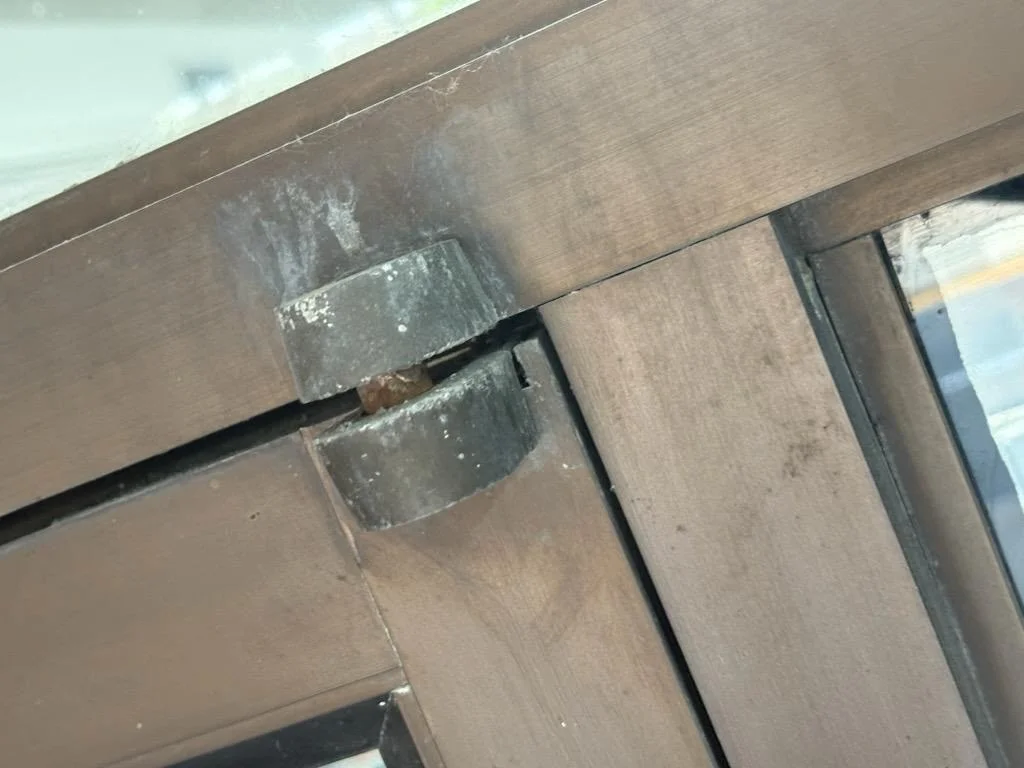
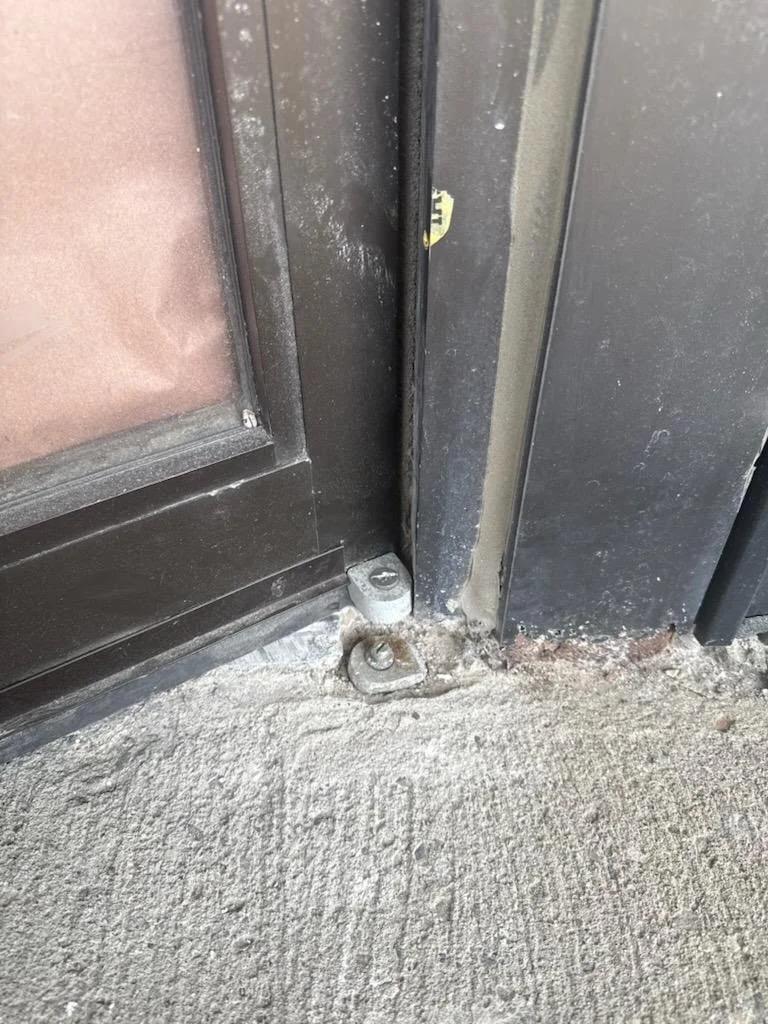
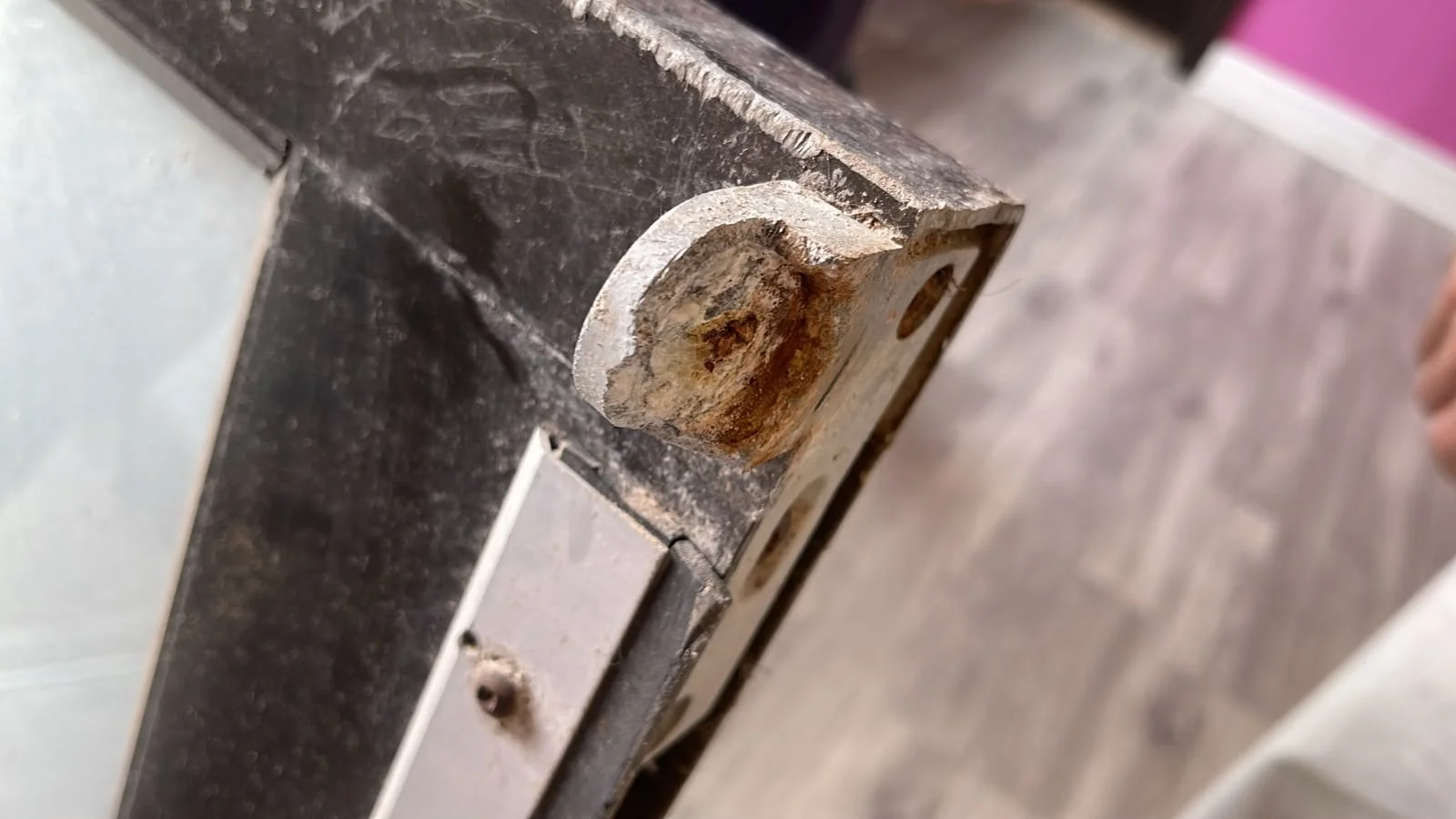
Worn hinges, damaged pivots or loose attachments can let the leaf drop. Rubbing and a latch missing its receiver guide the assessment but do not identify a part by themselves. The technician checks installed support and suitable preparation before selecting the repair.
Continuous hinges, butt hinges and concealed pivots need compatible preparation. Report repeated tightening or recurring displacement so the supporting attachment is assessed. Do not force a binding commercial door.
Closers, closing movement and reliable latching
A closer controls the door's closing movement, but it cannot correct every fault in the opening. If the leaf binds, the latch catches or the seals create resistance, turning up the closing force can conceal the symptom while making the door harder to use. We examine how the door moves and engages its latch before deciding whether adjustment, compatible parts or closer replacement is appropriate. Oil leakage, damaged arms or loose brackets also need assessment rather than repeated trial adjustments by building staff.
The mounting position, arm arrangement and door construction matter when identifying the closer. A replacement must suit the installation and intended use. Closing and latching are checked together after the agreed work, including the relationship between the latch and strike. If the main fault is the closing device, door closers and push bars explains that related hardware scope. Repair decisions should account for people using the entrance and the required access, not only whether the door eventually shuts.
Exit hardware is assessed as an operating system
A commercial exit can have a push bar, concealed rods, an interior bolt or other hardware that interacts with the door and frame. Difficulty opening, incomplete release or unreliable latching requires checking the actual mechanism and its installation. We ask how the door is used and whether it is a required exit. The appropriate repair must consider the complete opening and the responsible property's requirements. We do not treat a locked or obstructed exit as an acceptable substitute for fixing an operating fault.
Identify any fire-door labels before hardware changes are agreed. Generic replacement parts are not automatically suitable, and an opening repair is not a building-wide compliance assessment. Paired-leaf sequencing is discussed separately below.
Locks, handles and access control
Locks and handles should be assessed alongside the door alignment. A key turning normally does not prove that the latch or bolt engages correctly when the leaf closes. Forced-entry damage may affect both the strike area and the locking mechanism. We discuss whether repair, rekeying, compatible replacement or a wider opening repair is appropriate. Tell us about missing keys and who controls the building's locking system so the agreed work can be coordinated with the authorized contact.
Electrified locks, card readers and automatic operators can involve another service provider or the property's security team. An entrance may have a mechanical fault, an electrical fault or a sequencing problem between systems. We establish the scope of the door work and any coordination needed instead of promising that replacing a door part will resolve every control issue. Keep the relevant provider's contact available. Changing wiring, disabling controls or repeatedly forcing the door can complicate both diagnosis and the building's access arrangements.
Glazing and entrance-door damage
Cracked or missing glass can make an otherwise working entrance unsafe or unsecured. The assessment checks the glazing and surrounding frame as well as door operation. Safety-glass construction, dimensions and glazing details need confirmation before a replacement order. A damaged pane does not automatically mean the entire door must be replaced, but frame damage or a compromised leaf can change that decision. We explain what can be retained and what additional work the opening needs.
If permanent glazing cannot be fitted during the initial work, temporary securing may be appropriate after the opening is assessed. That securing stage is separate from repairing the leaf, closer or lock. Storefront glass replacement covers adjacent commercial glazing, while door glass replacement addresses a panel within a door. The distinction helps the property owner understand the proposed scope rather than assuming that every commercial glass fault is the same service.
Repair, replacement and disruption to the property
Condition, compatibility and repair scope determine whether retention or replacement is appropriate. We explain the alternatives before paid work. Neither repairability nor the need for complete replacement can be promised before the opening is assessed.
Provide trading hours, deliveries and the authorized access contact. Confirm remaining restrictions and the next stage before attendance ends. Supply or fabrication may affect completion; temporary use and finished repair must remain clearly distinguished.
A paired entrance needs a leaf by leaf repair decision
For a pair of commercial swing doors, describe the active leaf and the leaf normally retained closed. Record whether the problem appears when either leaf is used alone or only when both are opened. The meeting edge, flush bolts, rods and any coordinator form part of the actual arrangement. A leaf that closes against the wrong position can create a latching complaint even if the replacement latch works on its own. The assessment should explain which leaf or attached component creates the interference before the strike is moved to compensate.
Ask the repair proposal to distinguish retaining sound hardware from changing the preparation that supports it. Enlarged fixing holes, damaged attachment material or a displaced frame need a different response from a compatible worn-component replacement. If another provider must correct surrounding construction, identify that dependency before ordering. After the agreed work, the handover should say which leaves and relevant closing sequence were checked, rather than record only that a new component was installed.
Separate an opening secured overnight from a finished repair
For a damaged business entrance, ask which function a temporary arrangement restores and which remains unavailable. Protection against an exposed opening does not by itself establish normal exit operation, customer access or finished glazing. The authorized property contact needs a clear description of restrictions, outstanding components and who coordinates the next stage. Keep a required exit and an accessible route in that discussion; neither should be assumed satisfactory merely because the opening can now be locked.
Documented feedback about commercial door work
Snappers Fish Market's original account describes a door replacement with existing brass handles transferred to the new door. This illustrates a replacement scope with retained hardware, rather than evidence that every handle can be transferred to every leaf. Colin Tooke's saved review excerpt mentions a broken door closer. The excerpt's missing ending has not been reconstructed. These are separate pieces of customer evidence about commercial entrance and closing-hardware work, and their wording and individual ratings are preserved below.
For a powered entrance whose activation or movement is failing, see automatic door operator repair. Describe the operating fault when calling so the visit can address the opening rather than one assumed component. Keep staff clear of unstable or unpredictable doors and tell us about any exit or security restrictions. The assessment, agreed scope and final operating checks are what connect the repair to the way the property actually uses its entrance.
Storefront entrance movement has its own repair scope
For a glazed aluminium swing entrance with scraping, pivot wear or latch misalignment, our storefront door repair guide explains leaf support and hardware assessment. Fixed display glazing remains a separate scope; identify whether the fault affects movement, glass or both.
When the business opening needs urgent assessment
If damage, failed release or unreliable securing makes ordinary use inappropriate, emergency commercial door repair 24/7 explains the urgent access, repair and temporary securing scope. Identify required exits, occupied premises and the authorized contact when calling. A temporary arrangement should be recorded separately from completed permanent work.
For a steel pedestrian leaf or hollow metal frame with damage, corrosion or failed preparation, commercial steel door repair explains the assembly-specific repair and replacement decisions. It distinguishes retaining a suitable frame from replacing the complete opening.
Personnel door work at an operating industrial site
For a site with staff entrances, internal passages and several shifts, industrial and warehouse door repair explains opening lists, access coordination and repair handover. The guide concerns pedestrian doors and related glazing, with each doorway assessed separately.