
Guides
6 min readUpdated
Setting blocks carry glass weight into the supporting frame. Understand their relationship to retention, seals and contact materials before approving a replacement scope.
At a glance
- Setting blocks support the glass within its specified system.
- Support, retention and sealing have different roles.
- Use the identified system's compatible components and assessed support arrangement.
Setting blocks carry glass weight into its supporting frame
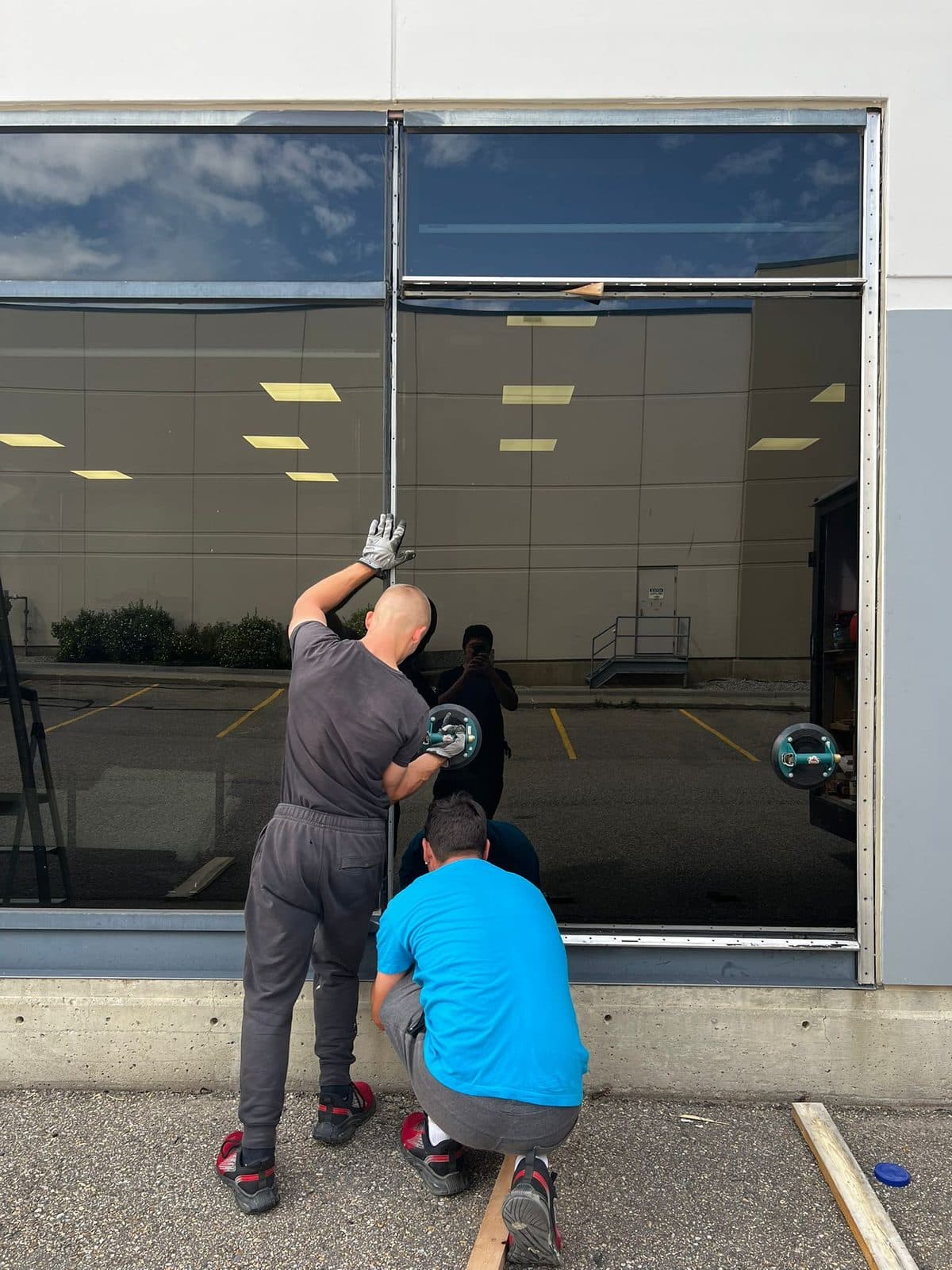
Setting blocks support the glass at defined bearing points within a framed glazing system. They transfer its weight to the supporting frame and help maintain the required separation at the glass edge. They belong to the installation specification alongside the parts that retain and seal the pane. A replacement order needs that support arrangement confirmed, even when the visible frame is staying.
This guide explains conventional framed glazing, such as a fixed storefront pane. A glass door supported through fittings or another specialist system needs its own detail. If glass is cracked, loose or moving, keep people clear and arrange assessment. Do not push the pane, remove a stop or slide anything beneath it to investigate its support.
Follow the weight through four labelled parts
Use this original conceptual description to read a replacement proposal. It describes relationships, without specifying block positions, quantities or installation dimensions:
- A. Glass: the pane or complete glass unit has its own weight.
- B. Setting blocks: the specified bearing components receive that weight at the supported edge.
- C. Supporting frame member: the member beneath the blocks receives those loads.
- D. Frame support and attachment: the frame and its connections transfer the load onward to the supporting construction.
Read A through D as a weight-support path. A block is not an independent foundation: its receiving frame and that frame's support must also be suitable. Vitro's TD-140, Glazing Issues, makes both the setting blocks and the metal supporting members part of the design considerations for large insulating glass units. Its guidance connects block selection to the weight being supported.
This is why a proposal for new blocks does not, by itself, address a damaged horizontal member. Equally, retaining the frame does not establish that every old glazing component can be reused. The supporting detail needs to suit the replacement actually being supplied.
Keep support, retention and sealing distinct
Support answers where the glass weight bears. Retention answers how the selected assembly holds the glazing within the opening. Sealing answers how its specified joints and gaskets control air and water at their intended interfaces. These functions work together, but confirmation of one does not establish the other two.
The YKK AP YES40 FS/FI manual, glazing pages 27 and 28, provides an identified example. Its drawings distinguish the setting blocks beneath the pane from an anti-walk block in the YES40 FI vertical pocket. They separately label the exterior glass stop and glazing gasket. These are different components within the documented system, not interchangeable pieces of packing.
For the owner reviewing a scope, that creates three useful checks. Does the proposal explain the glass support? Does it identify suitable retained or replacement retaining parts? Does it identify the sealing work? A new gasket is not evidence that the block support was assessed, and a pane resting on blocks has not thereby been shown to have suitable retention or completed seals.
Compatibility concerns the materials touching each other
A block can fit the available space yet remain an unverified material choice. In an insulating glass unit, contact with its edge-seal materials matters. With laminated glazing, the interlayer and materials reaching it also belong in the compatibility review.
AGC's September 2025 Glazing Guidelines, Material compatibility section, identifies glazing blocks, sealants, laminated interlayers and insulating-glass edge seals among the interacting materials to consider. It includes direct and indirect contact with the edge seal. For its systems, compatibility verification normally rests with the complete window or facade system manufacturer.
A sealant example shows how specific that review can be. Sika's Sikasil WS-305 EU application limits require advance approval of materials in direct or indirect contact, expressly including setting blocks, gaskets and tapes. That is a condition for this product, not a recommendation to use it on an unidentified storefront.
The practical distinction is between mechanical suitability, including bearing and fit, and material compatibility, including the actual contact combination. A familiar colour, apparent firmness or generic material description does not document both. The replacement record should identify the block product and the relevant glass, seal and framing materials rather than say only new packing.
A changed glass construction needs a reviewed support detail
Changing the glass construction can change what the support must accommodate. The assessment should reconcile the proposed unit's weight, overall thickness and edge construction with the selected framing system. A thicker pane is not automatically a supported upgrade, and a similar visible area does not establish the same complete unit.
Vitro's large-unit guidance also considers frame deflection and drainage alongside block support. Those relationships explain why block selection cannot be separated from the receiving frame. They do not provide an owner with a universal block size or permission to adjust an installed pane.
For a storefront, storefront glass replacement connects the permanent glazing specification with its retained system. If associated frame or retaining work is needed, commercial glass repair is the wider assessment route. Keep any unresolved support condition attached to the order before the replacement is treated as ready to fit.
Record the support decision without dismantling the glazing
Use these labels in the proposal or existing opening record:
- Glazing being supported: identify the affected pane or unit and its confirmed replacement construction.
- Bearing arrangement: identify the applicable system detail, block product and receiving interface. Leave concealed details unconfirmed until assessed.
- Receiving frame: state what remains and any supporting work required before glazing.
- Contact combination: identify the glass-edge, sealant and other relevant materials against which compatibility was checked, with the supporting manufacturer information.
- Separate completion scopes: distinguish support work from retaining-part replacement and sealing work. Identify anything still pending.
Available drawings, product records and safe overall photographs can help identify the opening. A finished photograph usually cannot establish the concealed bearing or chemical compatibility. Do not remove trim to improve the record. The commercial glass warning-sign guide covers reporting observed damage while leaving hidden components for assessment.
Questions about glass setting blocks
Are setting blocks the same as an insulating-glass spacer?
No. The spacer separates the panes within the assembled glass unit. Setting blocks support that unit within its receiving glazing system. A proposal should distinguish the supplied glass unit from the components supporting it in the frame.
Are anti-walk blocks interchangeable with setting blocks?
Do not assume that. YKK's cited example identifies separate components and locations for those functions. Match each component to the selected system detail rather than treating every concealed block as the same part.
Can the existing setting blocks remain with new glass?
Retention needs an assessed decision about their condition, specification and compatibility with the replacement. Their previous use does not document a suitable match for a changed unit or new contact materials. Ask the scope to state whether they remain or are replaced.
Does a new sealant bead correct missing glass support?
It does not establish that the support has been corrected. The proposal needs a supported bearing arrangement as well as the selected retention and sealing details. Do not add sealant or packing as a trial remedy.
Does a crack near a block prove the block caused it?
No. The damage location is an observation, not a complete failure investigation. The glass, edge condition, support and surrounding history need assessment. Do not expose the edge or collect fragments to pursue a cause yourself.
Can I check the blocks by removing a glazing strip?
Leave the assembly intact. Removing a retaining component can disturb the glazing. Send available records and safe photographs; concealed support details belong to the assessed work. No block position or quantity in another system's drawing should be copied to your opening.