
Guides
8 min readUpdated
A finished tempered panel cannot be trimmed to fit a door. Understand the fabrication sequence, hardware preparation and safe information needed for replacement.
At a glance
- Finished tempered glass cannot safely be trimmed or drilled to fit.
- Confirm dimensions, edge preparation and fitting holes before manufacture.
- Record the actual opening safely and arrange assessment of damaged glazing.
Can you cut tempered glass after it has been made?
No. A finished tempered glass panel cannot safely be cut down to fit a different opening. If an existing commercial door needs a different glass size or new hardware holes, the practical route is to assess the opening and order replacement glazing with the required preparation completed before tempering.
That distinction matters when a tenant changes a handle, a replacement panel arrives oversized, or a shop entrance breaks overnight. A piece that looks nearly right is not a panel that can be trimmed into place. This guide explains the ordering decisions and information that help move the job forward without attempting to modify installed glass.
Why the manufacturing sequence matters
Tempering uses controlled heating and cooling to establish a stress pattern within the glass, including compression at its surfaces. Cutting the finished product interferes with that manufactured condition. Vitro's TD-138, Heat Treated Glass for Architectural Glazing, states that neither tempered nor heat-strengthened glass can safely be cut after heat treatment.
The useful distinction is between fabrication and installation. Fabrication establishes the panel's shape and preparation; installation places the finished product into its intended assembly. A correctly fabricated panel still needs suitable support and installation. An incorrectly sized finished panel needs a revised ordering decision, rather than an improvised adjustment to the glass.
Holes, notches and edge preparation belong in the order
A new pull handle may need different hole spacing. A lock fitting may need a cut-out. Those requirements should be settled before the replacement panel is manufactured. Pilkington's toughened-glass product guidance identifies cutting, drilling and edge working as processes completed before toughening.
Ask the assessor to connect each proposed fitting to the panel drawing. Identify whether existing hardware will be retained, whether its preparation can be confirmed, and whether another component needs replacement. Do not purchase a matching-looking handle and assume its fixings will align. The order should identify the actual hardware arrangement rather than leave the installer to resolve missing holes on site.
Grinding a little from an edge is not a dependable workaround. Vitro TD-124, Fabrication of Heat Treated Glass, advises against further fabrication after heat treatment, including grinding and edging. A proposal to alter the glass should therefore be clarified before work proceeds.
Identify which part of the entrance needs replacing
Commercial entrances do not all use the same glazing arrangement. A largely glass door leaf with fittings attached to it presents a different replacement task from a framed door holding a glass insert. A fixed sidelight beside the door is another separate opening, even if the panels look similar from the pavement.
For a glass door leaf, tempered glass door replacement considers the panel together with its support, fittings and preparation. For glass held within an existing door, door glass replacement assesses the glazing and whether the surrounding leaf remains suitable. A sound frame does not automatically require replacement simply because its glass is damaged.
If the construction is uncertain, describe it rather than choosing a product label. Mention visible framing, the location of handles and whether the affected panel moves. Existing drawings or a previous glazing invoice can help establish what was supplied. The assessor then confirms the replacement specification for that opening.
What a corner stamp can and cannot tell you
A readable marking is useful evidence. The Safety Glazing Certification Council's identification guidance explains that an etched or stamped label may identify a certified product and that its SGCC number corresponds to a manufacturing location. Copy the complete visible marking when it is safe to do so.
A photograph of a stamp is not a remote assessment of the whole door. It does not establish the panel's current condition, concealed dimensions, fitting compatibility or the requirements for a proposed alteration. Equally, a missing or unreadable marking should not prompt staff to test the glass. Send the available records and let the assessor identify the assembly without dismantling it for a better photograph.
Collect photographs without approaching broken glass
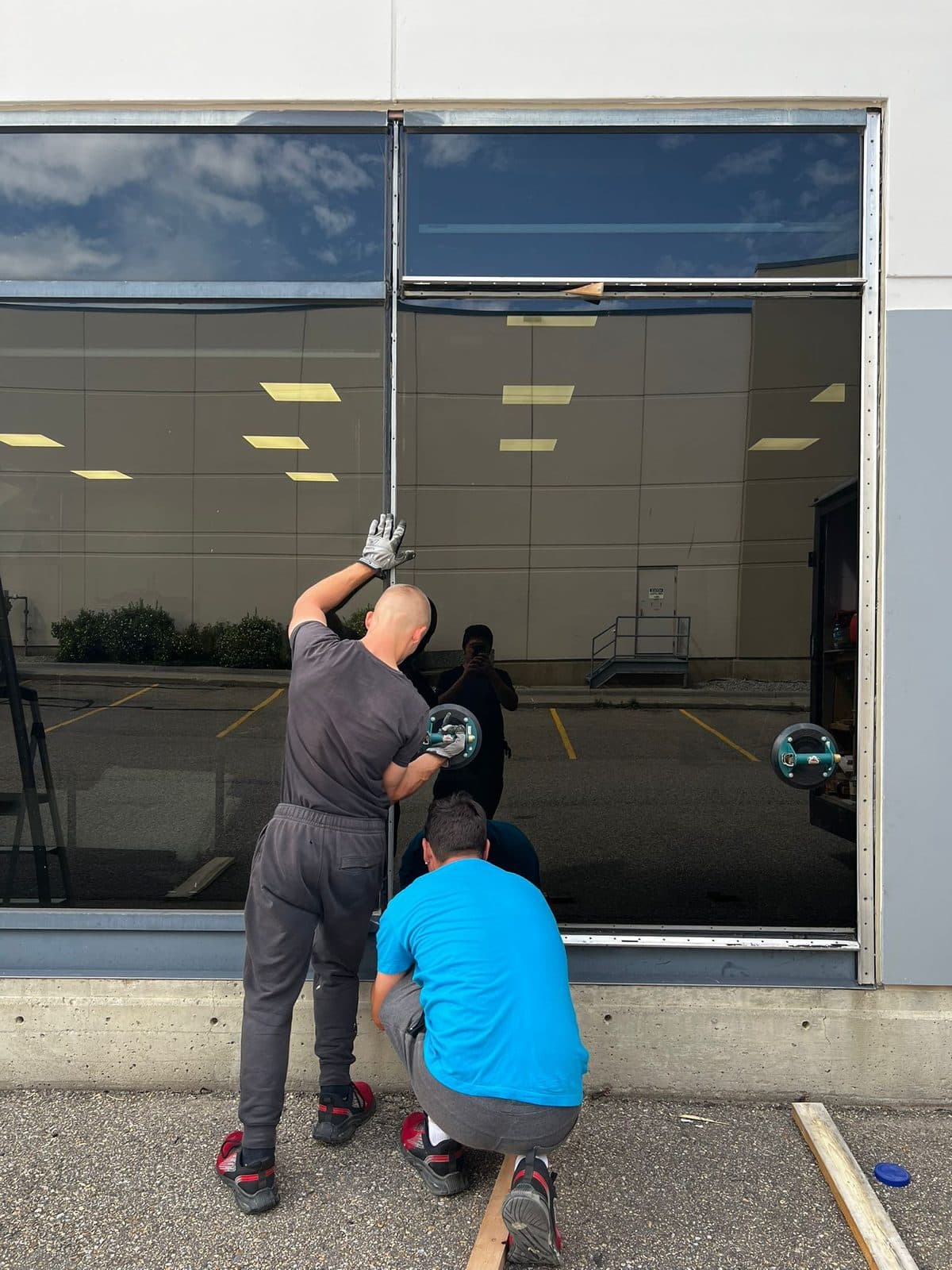
Start with an overall photograph from a stable, safe position outside the damaged area. Include enough surrounding context to distinguish the door from adjacent fixed glazing. If darkness, reflections or the position of the damage prevents a useful picture, report that limitation. A verbal description is preferable to stepping closer to shards or an unstable panel.
Useful existing photographs may show:
- The entrance as a whole and which panel is affected.
- A visible handle, fitting or marking, taken without touching the glass.
- The surrounding frame and the ordinary approach to the entrance.
- An opening reference already used on a floor plan or maintenance record.
Do not remove glazing stops, fittings or fragments to expose an edge. Do not operate a damaged door to demonstrate its movement. Provide dimensions only from existing records or an undamaged reference that can be checked safely away from the affected opening. Label those dimensions as approximate or recorded, not manufacturing sizes. Final ordering measurements belong to the assessment.
If a replacement panel arrives in the wrong size
Do not force the panel into the opening or agree to trimming as a way to finish the installation. Ask the supplier and assessor to reconcile the panel identification, approved drawing and actual opening. Establish whether the discrepancy concerns the glass dimensions, the selected fittings or the surrounding door preparation.
A different replacement order may be needed. Before that order is released, ask who will confirm the corrected dimensions and hardware details. If the original request was for a pane only but the existing door has a support or framing problem, make that additional scope explicit. Treating every mismatch as a glass-sizing error can leave the entrance fault unresolved even after another pane is supplied.
If the glass breaks while the business is closed
Keep people away from the damaged opening and tell the responsible property contact. Describe whether the entrance is unsecured and whether the affected area can be kept out of use. Do not ask staff to pick up large fragments, hold the panel, or fit a substitute pane.
Call our 24/7 line to discuss assessment and temporary securing. Explain any restrictions on access to the premises so the proposed response can address the actual opening. Temporary protection and the permanent glass order are separate stages; neither a phone conversation nor a photograph establishes that the entrance is ready for ordinary use.
Confirm the order before fabrication begins
The glass replacement assessment should identify the glazing construction, final dimensions, edge preparation and any holes or notches required by the selected fittings. Ask which components are being retained and which related door or frame work is included. A proposal should resolve those decisions before a finished panel is supplied.
Keep the agreed panel drawing and opening reference together. If hardware changes after approval, ask whether the drawing and glass order need revision. Do not treat a later component substitution as a small adjustment the installed pane can absorb. A revised drawing should identify which preparation has changed so the next panel is manufactured for the intended fittings.
Questions about cutting and replacing tempered glass
Can a glass shop cut a tempered panel slightly smaller?
Not safely after tempering. Have the opening checked and order a panel made to the confirmed dimensions instead of arranging trimming.
Can new holes be drilled for a different door handle?
New glass holes belong in the fabrication plan before tempering. Confirm the handle and its preparation before the replacement panel is ordered.
Is removing a small amount from the edge different?
It is still further fabrication of the finished glass. Vitro advises against post-treatment edging and grinding; discuss replacement rather than an edge adjustment.
Does a tempered stamp mean the existing panel can be reused?
No. A marking helps identify the product, but reuse also depends on condition, dimensions, fittings and the assessed requirements of the intended opening.
Does broken door glass mean replacing the complete entrance?
Not necessarily. A suitable door leaf or frame may remain. The assessment distinguishes replacing the glass insert, the glass leaf or surrounding components.
Can I send measurements from an old invoice?
Yes, as background information. Identify their source and date. They do not replace current confirmation of the panel and its preparation before manufacture.
What if I cannot photograph the damage safely at night?
Stay away from the opening and describe its location, access restrictions and securing need. Do not approach fragments or unstable glass to obtain a photograph.
Does this guidance apply to an insulated glass unit?
Do not assume a sealed unit can be trimmed. Its construction and individual glass layers must be identified so a suitable complete replacement can be specified.