
Business
4 min readUpdated
Glass, frames and door hardware work together to secure a storefront. What to have inspected and how to plan an emergency response.
At a glance
- Storefront security depends on the glass, framing and door hardware together.
- Worn latches and loose fittings are worth addressing before they fail.
- Have an emergency securing plan and keep your insurer’s contact details available.
Storefront security depends on the glazing, frames and door hardware working together. This guide covers what to have inspected and how to plan for emergency securing. It does not estimate local break-in rates or promise that a particular upgrade will prevent entry. The right priorities depend on your opening, its condition and how the premises are used.
Check the glass specification, not just the lock
A lock is only one part of a glazed entrance. The glass type, its condition and the way it is held in the frame also need checking. Do not assume that a pane is security-rated because it looks thick or has previously been replaced.
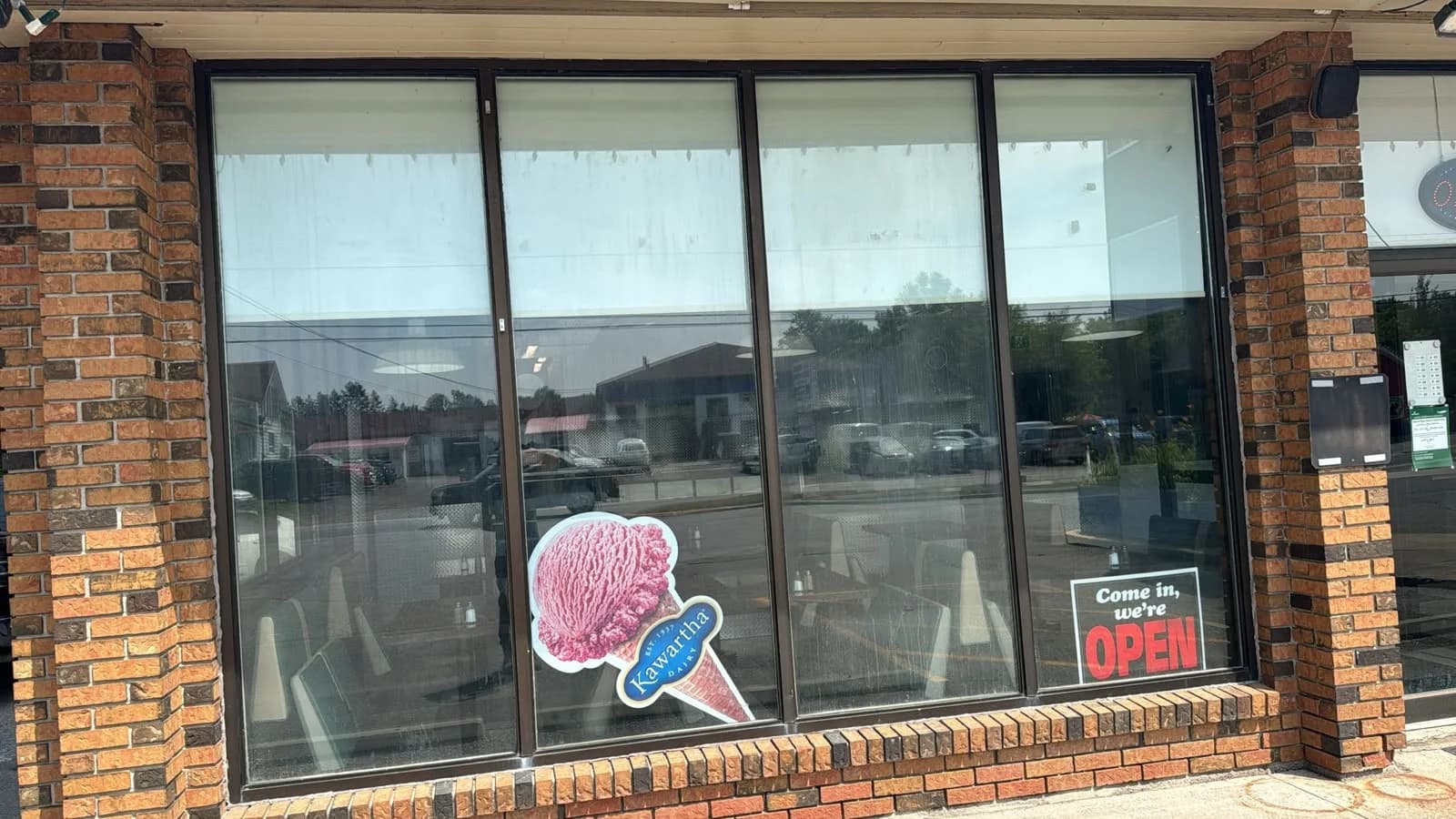
Laminated glass includes an interlayer that can help retain broken fragments. Its construction and performance vary by product; the word "laminated" alone does not identify a tested level of resistance. Pilkington's laminated-glass guidance explains how the glass layers and interlayers affect performance. We assess the opening and discuss suitable storefront glass options rather than rank every glazing upgrade ahead of every lock repair.
The frame around the glass matters as much as the glass
The frame, fixings and glazing retention are part of the assessment, not just the pane. Pilkington's safety and security guidance notes that glass can perform differently in different framing systems. A product's resistance claim should not be assumed to describe every existing storefront installation.
Report visible movement, gaps, damaged beads or seals, and any previous impact. Keep clear of loose glazing and do not strike or force a pane to test it yourself. The technician can identify repairs or further assessment needed before a replacement or upgrade is specified.
Check how the door closes and locks
A sticky latch, a door that no longer closes fully or loose hardware deserves attention. Similar symptoms can involve different parts, so an inspection should check operation, alignment and the locking and closing hardware together. Do not disable an exit device or prop a fire door open to work around a fault. Commercial door repair covers assessment and repair of these entrance problems; maintenance frequency should suit the hardware and how often it is used.
Sightlines and lighting change what an entrance looks like from the outside
Review whether entrances can be seen clearly and whether existing lighting is working, including at side and rear doors. Discuss obscured views, signage and lighting with the person responsible for the premises. These are part of a wider site review, not a guarantee that visible or well-lit entrances cannot be targeted. Do not obstruct exits or required access when rearranging displays or coverings.
What to include in your response plan
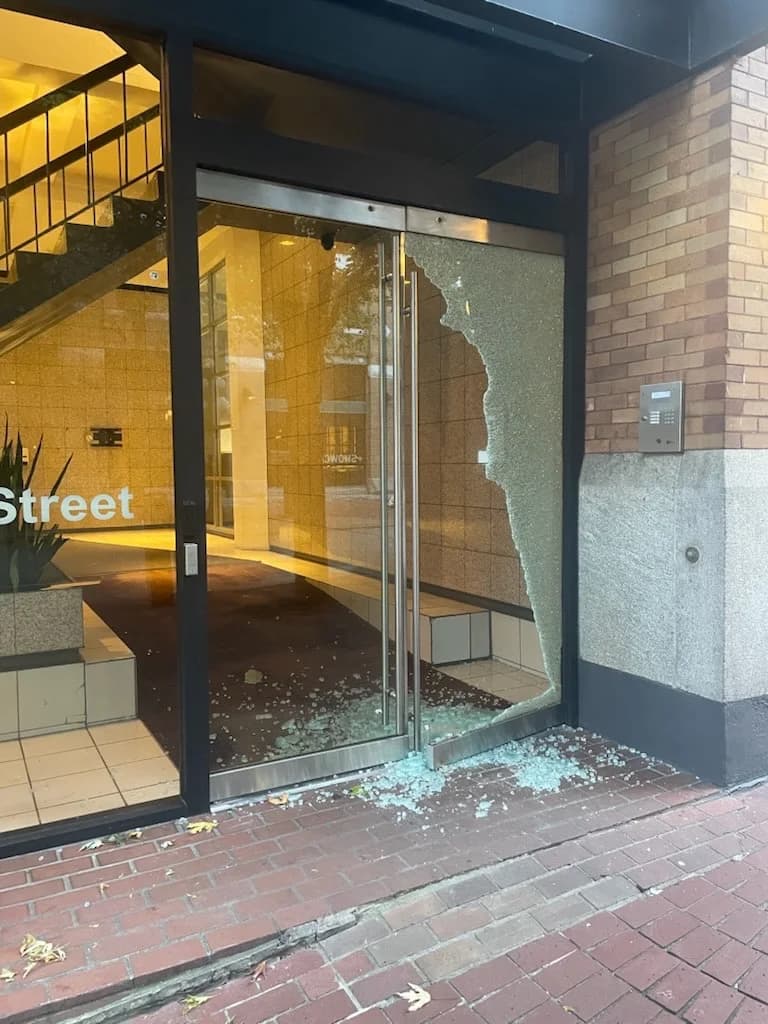
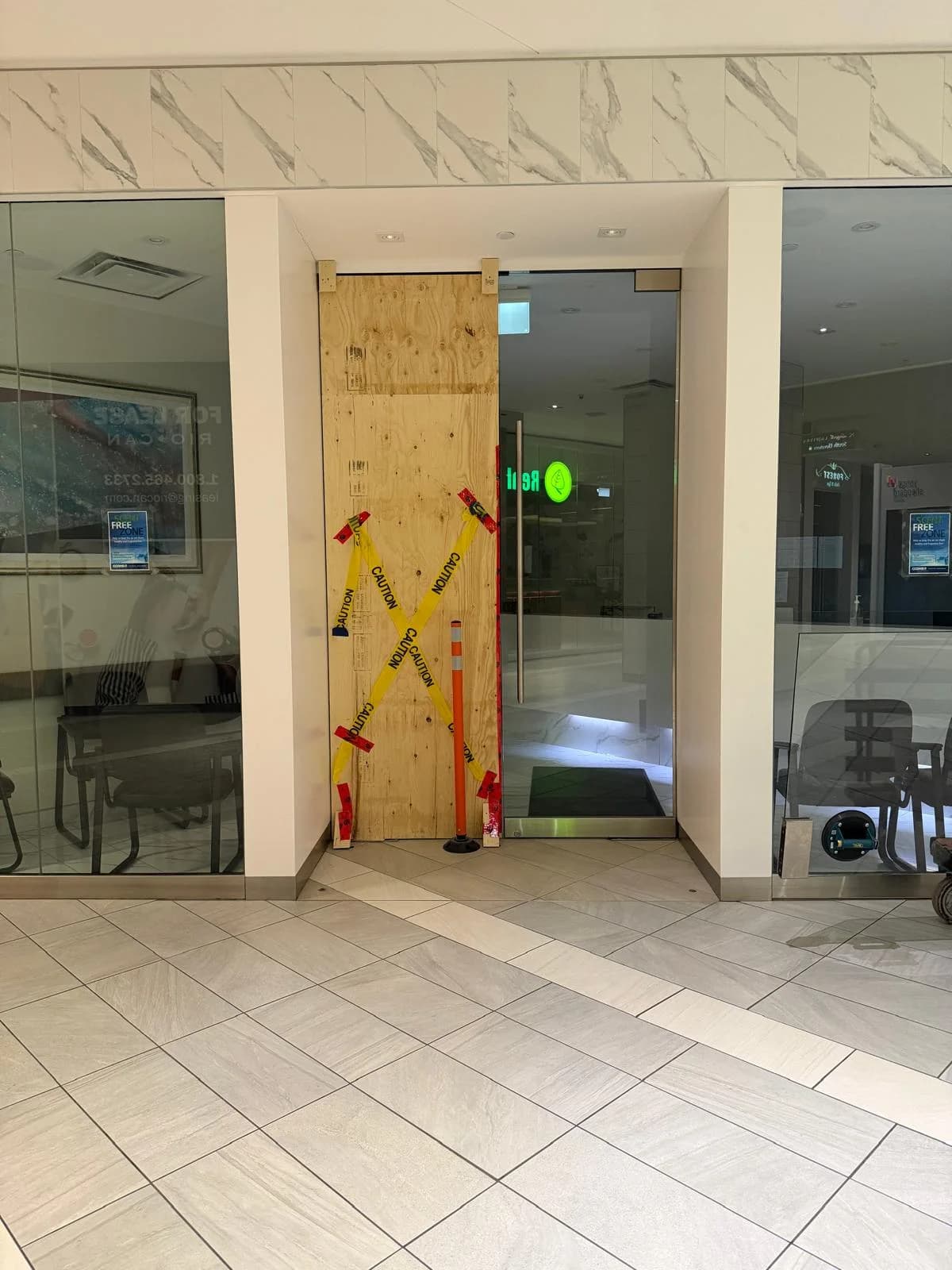
A storefront can still be damaged by a break-in attempt, storm or accident after improvements are made. Identify who to contact, how to keep people away from damaged openings and who can authorise emergency work. Follow the site's emergency procedures and approach only when it is safe.
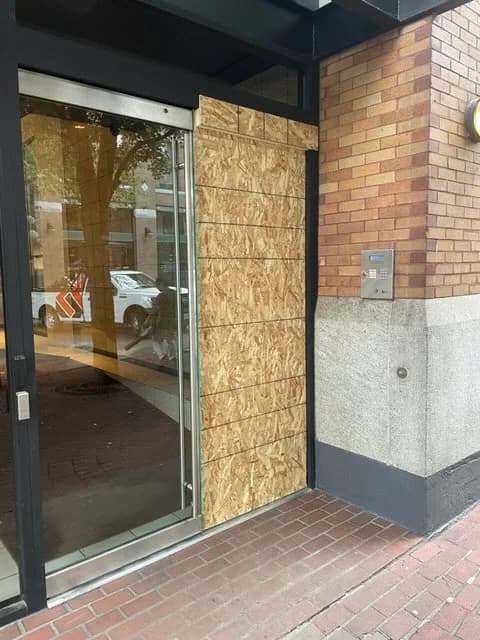
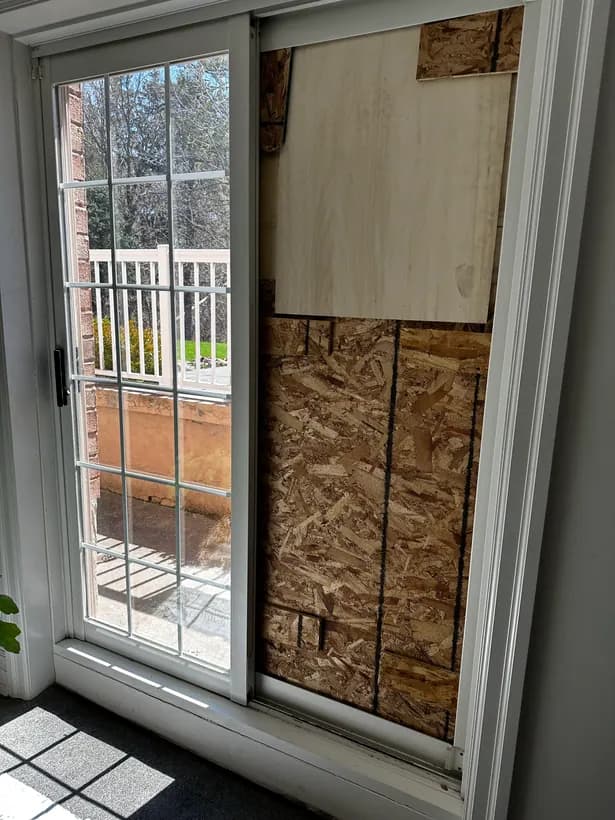
Board-up services provide temporary protection while permanent work is arranged. Boarding alone does not establish that a business can reopen; safe access, exit arrangements and the condition of the site still matter. We help with an official repair report, documentation and claim guidance at no added charge. Take photos only when safe and without delaying urgent safety work. Your insurer decides coverage and reimbursement.
Five checks to discuss at an assessment
- Check damaged or unsuitable glazing. Ask what glass is present, what condition it is in and which specifications are suitable for the opening.
- Inspect closing and locking hardware. Report sticking, slamming, incomplete latching or a change in normal operation.
- Include the frame and fixings. Assess the support and glazing retention rather than treating the pane as an isolated product.
- Review visibility and access around every entrance. Include side and rear doors, lighting and unobstructed escape routes.
- Write down the response plan. Record emergency contacts, authorisation arrangements and how staff should keep people away from damage.
A note on cost and priority
There is no universal upgrade order or price that suits every storefront. An unsafe or unsecured opening needs urgent attention. Planned improvements can then be compared against the site's condition, suitable product options, budget and access requirements. Ask for an itemised scope so you understand what is being repaired or replaced and what remains outside the work. No repair or upgrade makes a storefront impossible to break into.
If you want a walk-through of your own storefront
Contact us to arrange an on-site assessment of the glass, frame and entrance hardware. We explain suitable options and the quote before paid work begins. If damage has left the opening unsafe or unsecured, call our 24/7 emergency service for immediate dispatch. The arrival estimate is confirmed on the call, and permanent work is planned after the opening has been assessed.