Define the opening and the installation scope
Glass installation can mean fitting replacement glazing into a suitable existing assembly or supplying glazing within a wider door, window or storefront project. Identify which is being proposed before ordering. A fixed shopfront pane, moving window sash, door insert and patio-door panel have different support and retaining arrangements. Describe where the glass sits and whether the surrounding opening is being retained, repaired or replaced. That distinction establishes the installation scope rather than treating every transparent panel as the same job.
Door N Window repairs and replaces doors, windows and glass for residential and commercial properties throughout the GTA. We are insured, WSIB Covered and available 24/7, with same-day service available. Planned glazing and urgent damage can require different work sequences. The assessment identifies the actual opening, compatible materials, preparation and access before an agreed specification is ordered. A booking does not establish that every pane can be measured, supplied and permanently fitted during the first attendance.
Choose the service that matches the glass location
For a pane in an existing window, window glass replacement explains the dedicated glazing scope. Moisture between panes may involve an insulated glass assembly covered by sealed unit replacement. Those services assess whether the supporting window can stay. A window that is difficult to operate also needs its hardware and sash condition identified; fitting new glass does not resolve every movement or locking fault.
Door glass replacement concerns inserts, sidelights and relevant door panels. A large sliding leaf has a separate patio-door glass replacement scope. Business fixed panes and surrounding glazing are covered by storefront glass replacement. These specialist pages explain their assemblies in more detail. The broader installation plan connects the selected glazing service to the frame, access and related work needed at your property.
Safe photos of the complete opening help show its location, frame and nearby components. Explain whether it is fixed or moving, indoors or exposed, at ground level or higher up. Available labels and project drawings can help prepare the assessment. Approximate dimensions are useful enquiry details, but they are not a fabrication order. Measurements and the required construction need confirmation for the actual assembly.
If glazing is cracked, displaced or missing, keep people away from loose material and report the condition from a safe position. Do not remove retaining parts, push against the pane or continue operating a damaged glazed door to obtain a better photograph. Explain access from both sides, furniture, displays and any restrictions. A suitable working area and the supporting condition need assessment before removal, measuring or installation is agreed.
Assess the frame and retaining system before ordering
The installation depends on the parts that support and retain the glass. Stops, beads, gaskets, sealants and other preparation vary between assemblies. A pane damaged by impact may be accompanied by distorted framing or missing retaining components. The technician identifies what remains suitable and what needs repair or replacement before the new glazing is specified. An apparently intact face of a frame does not show every concealed fixing or retaining condition.
Where frame work is required, the proposal should state whether it is part of the glazing scope or a separate project task. A new pane should not be fitted as a way to conceal unresolved support damage. Surrounding wall movement or structural concerns may need further assessment by the responsible property team. The confirmed installation arrangement should explain retained components, preparation and any work that must be ready before the glass is made or delivered.
Confirm the glass construction for its intended use
The specification needs to account for the actual opening and relevant project requirements. A clear-looking pane can have different construction from another pane beside it. Tempered glass, laminated glass and an insulated glass unit describe different arrangements, and they are not interchangeable solely because their visible dimensions match. Available markings and drawings can help identification, while missing information may require further assessment before a replacement is selected.
Discuss any known safety, security, appearance or other performance requirement before ordering. A proposed change needs compatibility with the support and preparation. Laminated glazing uses bonded layers; that description alone does not establish a particular security result or that it suits every frame. Where a labelled assembly is involved, its documentation and components must be considered together. We do not infer a rating or certify building compliance from a photograph of an existing pane.
Measurements include the assembly around the pane
The technician confirms dimensions and relevant glazing details at the opening, including the retaining arrangement and preparation affecting fit. A visible daylight opening can differ from the size needed within the frame. Photos, a tape held against one face and old paperwork can help an enquiry, but the actual dimensions and specification must be established before an order is approved. Hidden edges or damage can affect when accurate measurements are possible.
Tell us about planned changes to the surrounding window, door, floor or frame. If another provider is altering the opening, identify who will confirm the preparation is complete. Ordering against an unfinished arrangement can create a mismatch between the supplied pane and the intended installation. The proposed scope should identify any further measurement or approval stage so delivery is tied to a confirmed assembly rather than assumptions about what the finished opening will be.
Insulated units need the whole glass assembly identified
A sealed unit combines glazing panes within an insulated assembly. Its replacement requires the existing frame, retaining arrangement and relevant unit construction to be identified. Describe whether the complaint is broken glass, persistent moisture between panes or another visible condition. Moisture on a room-facing surface and moisture inside an insulated unit are different observations. The assessment should establish the scope rather than select a replacement from the word foggy alone.
The sealed unit guide explains that service in more detail. A suitable frame may be retained while the glazing assembly changes, but its condition and preparation need confirmation. If operation, drainage or surrounding support also requires work, identify that separately. A new sealed unit does not repair unrelated hardware damage or every water-entry issue around a window. The installation proposal should describe the components involved and the result being agreed.
Door glazing must work with the moving leaf
Glass in a moving door needs support and preparation suitable for that assembly. Identify any holes, fittings or retaining components associated with the pane, where known, and whether the door itself is damaged. A replacement may require confirmation of the complete construction before fabrication. Do not assume features can be added to a finished pane afterward or that a different glass type can accept the existing hardware without assessment.
For a whole glazed leaf, tempered glass door replacement explains the door assembly scope. For a retained door with an insert, the glazing and its surrounding leaf may be assessed separately. The technician should also identify support, closing or latching problems that affect normal use. New door glass does not correct a dropped leaf, incompatible lock preparation or a faulty automatic operator. Coordinate those tasks before treating the entrance as restored.
Plan commercial glazing around access and trading
A business installation needs an authorized contact and a practical access arrangement. Tell us about trading hours, deliveries, shared corridors, displays and building-management approvals. A street-facing storefront and a pane inside a managed centre can require different working areas and access procedures. The responsible contact should explain restrictions before the visit, including when the opening can be made unavailable for the agreed task.
The commercial glass repair guide covers related business glazing assessment. Large panes, damaged frames or limited handling space can affect preparation and the work sequence. A project booking does not promise uninterrupted customer access throughout removal and fitting. Identify surrounding door, frame or provider work in the proposal. The site contact needs to understand what will be installed and which restrictions remain before staff resume ordinary use of the affected area.
Separate emergency securing from permanent installation
After impact or an incident, the first agreed stage may be removal of unsafe material or temporary protection of an exposed opening. Emergency board-up is a separate service with its own support and access assessment. Follow relevant incident restrictions and keep people away from damaged glazing. Necessary securing should not be delayed solely to collect measurements or create an ideal photograph for a repair enquiry.
Permanent glazing follows the confirmed specification, suitable preparation and agreed access. Temporary covering should not be described as completed glass installation. The work record should identify what was secured, what remains to be supplied and any restriction on using the opening. If the supporting condition changes before the permanent visit, tell the authorized contact. A covered gap does not establish that damaged frames, doors or surrounding building conditions have also been restored.
Installation checks and care follow the agreed assembly
At handover, the property contact should understand which pane and retaining components were installed and any related work completed. The relevant checks depend on the actual assembly and scope. A moving window or door also needs its intended operation considered, while a fixed pane has a different role. Record outstanding frame, hardware or provider work rather than treat a visually clear panel as proof that every part of the opening has been repaired.
Keep applicable equipment and care instructions available. Cleaning and future maintenance should suit the installed glass and surrounding materials. Report movement, changed operation or new damage before continuing ordinary use of an unstable assembly. The work record can help a future visit identify the specification and retained components. Where repair-related insurance paperwork is needed, we help describe the actual damage and work; your insurer determines coverage and reimbursement under the policy.
Use documented work with its actual stages preserved
Gary Burlacoff's original review describes an exposed storefront temporarily boarded and later fitted with replacement glass. That account retains the difference between securing and permanent glazing. Manojkumar M.'s original window-glass feedback concerns its own recorded scope. Neither review is changed into a claim about another opening or an invented installation location. Original wording and individual ratings remain intact.
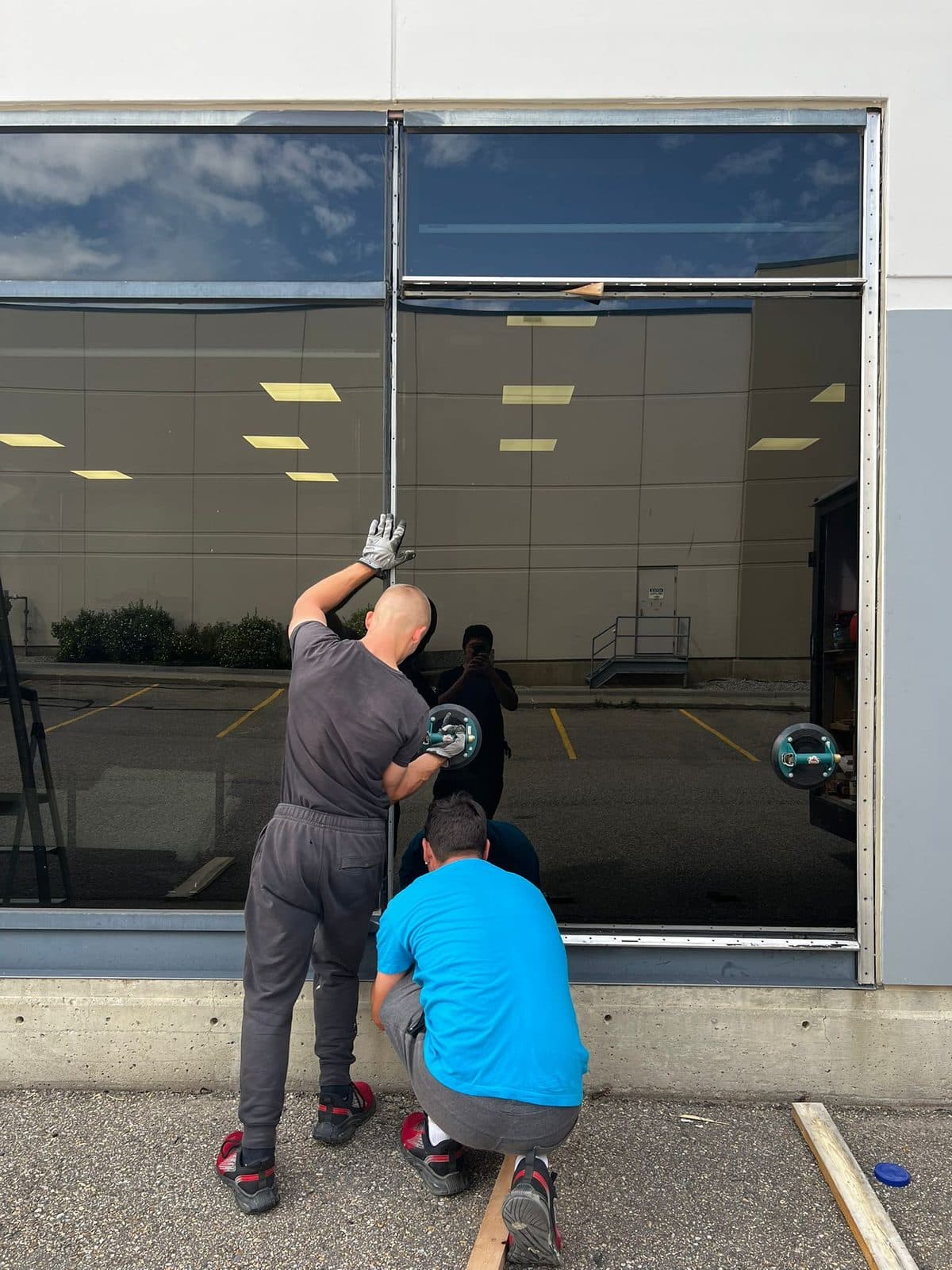
The existing on-site photograph used with this guide shows technicians handling a commercial glazing panel with suction lifters at an opening. It records that visible working stage, without adding a new date, address or completed result. For your project, the useful next step is to identify the opening, supporting condition and required work, then arrange the assessment that connects the glazing order to the installation actually needed.