
Samuel Yang

“I am satisfied very much on the patio glass replacement work done by very skillful technicians. Thank you.”
Open
Sliding and swing patio doors · 24/7 emergency service
A damaged patio-door pane needs assessment of the glazing and the panel that holds it. We identify the replacement specification and any separate frame or hardware work.
Leave your details and get $50 off your first repair.
Original customer reviews
Samuel Yang
“I am satisfied very much on the patio glass replacement work done by very skillful technicians. Thank you.”
Susan Muir
“Maks did a fantastic job replacing my fractured patio window. He was quick and efficient, courteous and professional. Would highly recommend this company!”
Marshall Berenbaum
“Quick and relatively painless window replacement, Dekel was communicative and knowledgeable. Highly recommend.”
Wondraw
“Great service which fixed my malfunctioning sliding patio door lock. They were able to reduce their original quoted price which made the service more reasonable. The tech was courteous and knowledgeable, but had to return on a separate day due to an incompatible lock mechanism. He visited the very next morning and completed the repair quickly. Thanks for all your help! Highly recommend- 5 stars!”
Patio door glass replacement addresses the glazing within a patio-door panel. The surrounding panel frame, rollers, tracks, hinges and locking hardware may be serviceable, or they may need work of their own. Damage to the pane does not identify the condition of those components. We inspect the assembly before recommending what can be retained. That distinction helps establish whether the task is glazing replacement, a wider panel repair or replacement of a larger part of the opening.
Tell us whether the affected panel slides, swings or stays fixed, and whether the glass is cracked, shattered or cloudy. Describe the current ability to close and secure the doorway from a safe position. Door N Window is insured, WSIB Covered and available 24/7 across the GTA, with same-day service available. We discuss the opening and safe access when you call, then confirm the glass specification and agreed scope on site rather than promising that every damaged panel can be repaired the same way.
A patio door is a large moving assembly, and its glazing needs support within the panel. Do not slide or swing a damaged leaf to check whether it still works. Glass in a track, loose remnants or damage around the panel frame can make operation unsafe. Keep people and pets clear of the opening and the area around it. A pane may still be partly retained without being suitable for normal use. The technician assesses the remaining glazing before removal or temporary securing is arranged.
Tell us if pieces have fallen onto a balcony, exterior step or walkway. Photos can help only from safe positions and should show the whole opening where possible. Do not remove the panel, pry out beads or lean over a balcony to obtain an image. If the opening is exposed, emergency board up may be needed while the replacement plan is confirmed. A covered opening remains a temporary arrangement until the agreed permanent glazing and any related repairs are completed.
Describe whether the door opens onto a yard, deck or balcony and identify the floor level. Access from inside and outside can affect the working plan. Tell us about narrow stairs, elevator arrangements, property-management rules and the authorized contact. A photograph of the whole patio-door assembly helps distinguish the moving and fixed panels and shows the surrounding frame. Approximate dimensions are useful for preparation, but confirmed order measurements are taken from the actual installation.
Include visible labels or glazing markings when safe to photograph. Do not take the panel apart to look for them. Tell us about previous glass or roller work and any change in operation before the breakage. Existing documentation may help identify the door or glazing specification, but a recognizable handle does not prove the glass details. We assess the actual panel, retaining system and assembly rather than treating every patio door of similar appearance as an interchangeable unit.
Patio-door glazing can include an insulated glass assembly, safety-glass construction, coatings or other features that affect the replacement. An insulated unit contains panes separated and sealed as an assembly, and its overall thickness must suit the panel. The visible glass area is not necessarily the unit's full dimension within the frame. The technician checks the information needed to specify a made-to-fit replacement rather than ordering only from the exposed pane size.
Glass construction and applicable safety requirements are considered for the actual opening. Where tempered glazing is selected, dimensions and any required details belong in the fabrication specification before heat treatment. Do not attempt to trim or drill an existing tempered pane. Coatings, tint, decorative details and the identified assembly can affect supplier preparation and visual matching. We discuss those decisions after assessment and do not promise that a clear-looking panel has the same construction as the original glazing.
The panel that holds the glass needs inspection alongside the glazing. Retaining beads, stops, seals and supporting details depend on the door's construction. Damage at a corner or around an attachment point can influence whether the panel can accept the proposed replacement. A distorted or damaged frame should not be ignored because the glass is the most obvious broken part. The scope identifies the components that can be retained and any preparation or repair required around them.
Tell us if the door was difficult to operate before the glass failed. That history helps identify other assembly problems that may need assessment. We do not assume the rollers, track or lock are sound solely because the pane can be replaced. Likewise, an older door is not automatically a complete replacement job if the assessed components remain usable. The condition of this panel and opening determines the repair options, rather than a blanket rule about the door's age or appearance.
A sliding panel must be supported and move appropriately in its track, while a hinged patio-door leaf depends on its support and alignment. The glass replacement and operating hardware interact through the panel, but they are different tasks. If a slider drags or needs lifting to latch, the assessment may need to include rollers, support or track condition. Those faults are not automatically resolved by a new glass unit. Sliding door roller repair covers that related operating problem.
Locks, handles and strikes also need attention when operation or securing has changed. Tell us about a latch that misses its strike or a panel that no longer sits correctly. Patio door repair addresses the broader moving assembly and hardware. The agreed scope should distinguish those repairs from glazing replacement so it is clear what is being restored. Do not continue forcing a damaged patio door or adjusting its hardware as a trial fix before assessment.
If the glass is intact but cloudy, the location of moisture matters. Condensation on an accessible surface is different from persistent moisture or deposits within an insulated unit. Tell us when the misting appears and whether it is on the room side or between the panes. Do not dismantle the panel or approach the exterior unsafely to test it. The inspection establishes the glazing condition and any other moisture issue around the assembly.
Where the sealed glazing component needs replacement, its specification still must fit the patio-door panel. Replacing the unit does not automatically repair operating seals, perimeter joints or another source of water entry. Describe those symptoms too. Sealed unit replacement explains the intact-but-misted glazing issue in more detail. The repair plan should identify which component has failed and which other conditions remain, rather than treating all cloudy patio doors as identical jobs.
The replacement is prepared from the confirmed dimensions, construction and other identified details. Some glazing requires supplier fabrication after the assessment. Safe access, hidden edges or additional panel damage can affect what can be confirmed during the first visit. We explain the specification and expected preparation schedule when the order can be established. We do not treat that estimate as a guarantee that every panel will be available or fitted during the initial appointment.
If temporary securing is needed, discuss how the property will be accessed and what restrictions remain while the glazing is prepared. A patio door may be a frequently used route to the outside, and covering the opening can change how it is used. The arrangement must be assessed with the doorway and access needs in mind. Report loose protection, further movement or changed conditions. Do not remove or adapt the temporary materials while waiting for the permanent replacement.
The size and position of the glazing influence the installation plan. Space is needed to handle the assembly and protect the working area, and upper-floor or balcony access can introduce additional arrangements. Tell us about stairs, room layout and building restrictions before the visit. Clear ordinary belongings from the agreed area when safe. Staff or occupants should not try to remove a damaged moving panel or carry loose glazing in preparation for the technician.
Removal and fitting follow the identified patio-door system and agreed scope. Some work may involve the panel assembly as part of accessing its glazing, while other openings have different retaining arrangements. The technician establishes the method after assessment rather than providing a generic dismantling procedure for an unknown door. If previously hidden damage changes the proposed repair, it needs discussion before additional work proceeds. You approve the work and quote before paid repair work begins.
At handover, establish the glazing fitted and any panel-frame or retaining-system work completed. If the scope includes restoring normal operation, movement, closing and locking need consideration alongside the new glass. A replaced pane does not show that a separate roller or latch fault has been addressed. The record should identify the completed work and any additional repair or return visit still required for the patio-door assembly.
Follow the guidance supplied for the materials and components used. Report visible damage, unusual movement, new water entry or difficulty securing the door rather than adjusting the glazing or continuing to force the panel. Keep the agreed scope available for follow-up questions. Where the damage relates to an insurance claim, we help describe the work in the paperwork. Coverage, authorization and reimbursement remain decisions for the insurer and the policy.
Samuel Yang's original review specifically describes patio glass replacement and satisfaction with the work. Susan Muir's separate account describes replacement of a fractured patio window. Their wording does not identify every construction detail of the glazing, so none has been added here. These accounts support the described patio-glazing work without being used to promise another job's glass type, fabrication schedule or outcome.
Original names, individual ratings and review wording appear below unchanged. Job photographs need separate office, privacy and publication approvals. For your patio door, the practical next step is an assessment that connects the glass specification with the panel and its operating condition. That allows the scope to address the damaged glazing while making any separate hardware, frame or access work clear.
 Originally posted on Google
5 / 5 stars · North York
“I am satisfied very much on the patio glass replacement work done by very skillful technicians. Thank you.”
Originally posted on Google5 / 5 stars · Scarborough
“Maks did a fantastic job replacing my fractured patio window. He was quick and efficient, courteous and professional. Would highly recommend this company!”
Customer reviews
Shattered and fractured patio-glass reviews come first, followed by more genuine customer experiences. Open a review to read the original feedback and see the photos.
Samuel Yang
Originally posted on Google“I am satisfied very much on the patio glass replacement work done by very skillful technicians. Thank you.”
Susan Muir
Originally posted on Google“Maks did a fantastic job replacing my fractured patio window. He was quick and efficient, courteous and professional. Would highly recommend this company!”
Marshall Berenbaum
Originally posted on Google“Quick and relatively painless window replacement, Dekel was communicative and knowledgeable. Highly recommend.”
Wondraw
Originally posted on Google“Great service which fixed my malfunctioning sliding patio door lock. They were able to reduce their original quoted price which made the service more reasonable. The tech was courteous and knowledgeable, but had to return on a separate day due to an incompatible lock mechanism. He visited the very next morning and completed the repair quickly. Thanks for all your help! Highly recommend- 5 stars!”
Open a review to read the original customer feedback.
Read more customer reviews






















Work at these locations includes jobs through facilities contractors. Logos belong to their owners; no affiliation, sponsorship or endorsement is implied.
This service
Repairs, replacements and the right next step for your property.
The glass is quoted once the panel is measured. Cost follows the size and thickness of the unit, the coating and gas fill, whether the panel is oversized or needs two technicians, balcony or backyard access, and any board-up done after hours.
We assess the opening, measurements and work needed before preparing a quote. Call or leave your details to discuss a visit.
The work
We clear the broken glass out of the panel, the track and the deck, then board the opening tight to the frame so the house is closed up overnight. Tempered glass breaks into thousands of small pieces that spread widely, so the clearing takes longer than people expect. That work is quoted as its own line for your insurer.
The panel comes out and the glass is measured off the sash rebate rather than the broken piece, along with the unit thickness, spacer depth, low-E coating and any obscure pattern. Patio units are heavy and rarely a standard size, so an accurate measurement is what determines whether the new unit drops in cleanly.
We identify the required safety-glazing specification, dimensions, thickness and any coating or sealed-unit details before ordering. Tempered and laminated products are not interchangeable in every door. Available options and compatibility with the retained panel are confirmed during assessment.
The new sealed unit is set on fresh blocks with new glazing tape or sealant, the stops are refitted, and the panel is rehung on its rollers. We adjust the roller height so the panel sits square, check the lock engages the keeper without pushing sideways, and confirm the sill drainage is clear before we leave.
While the panel is out, worn rollers, a flattened interlock seal and a failing mortise lock are easy to deal with, and we quote them separately rather than adding them silently. If the frame has been racked in a break-in and will not hold a new unit square, we say so and quote a replacement door instead.
Customer projects
See the opening, the work and the customer’s own feedback.
A closer look
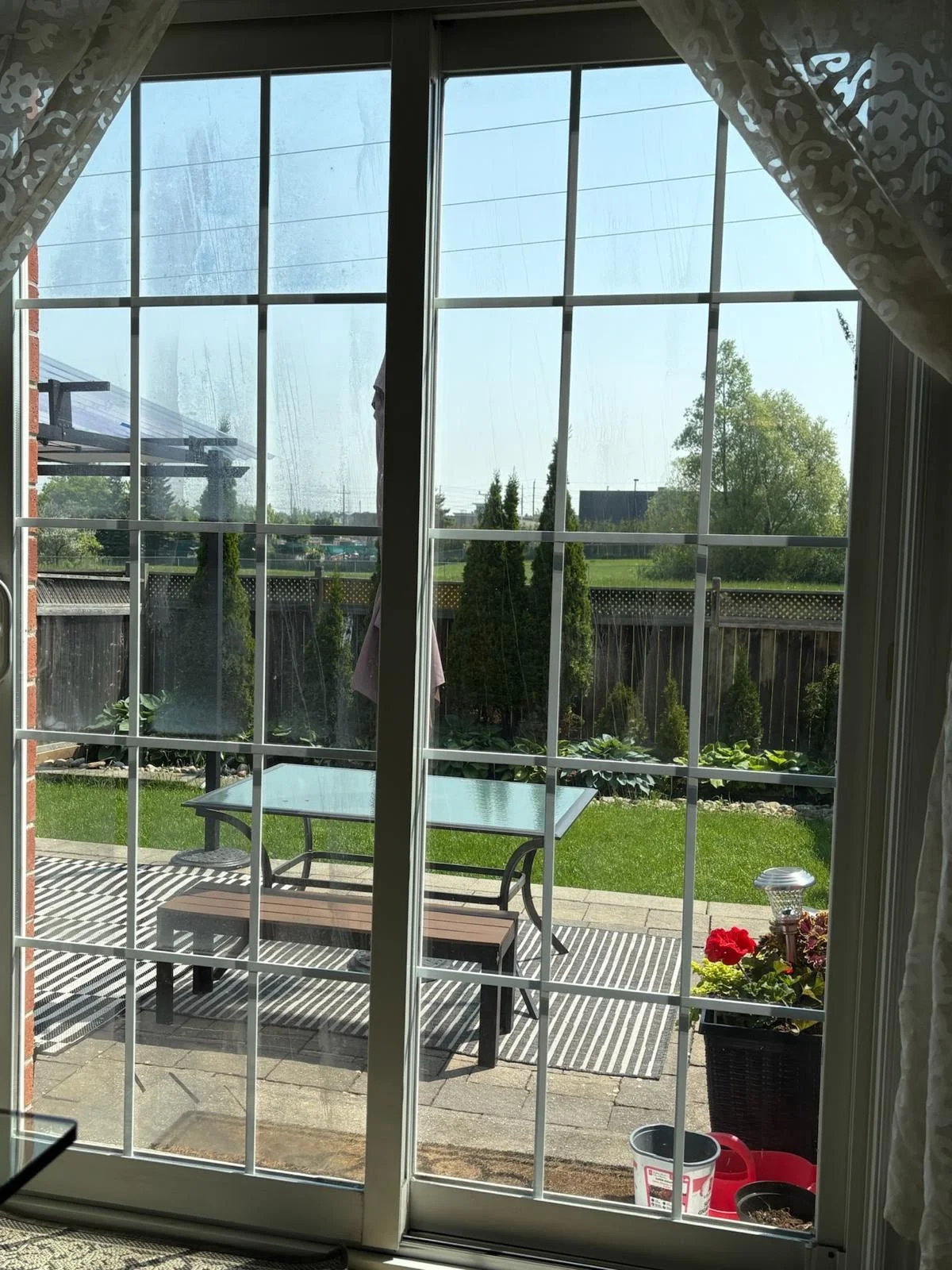
An interior view of the sliding panels and surrounding frame, shared on our Google Business Profile.
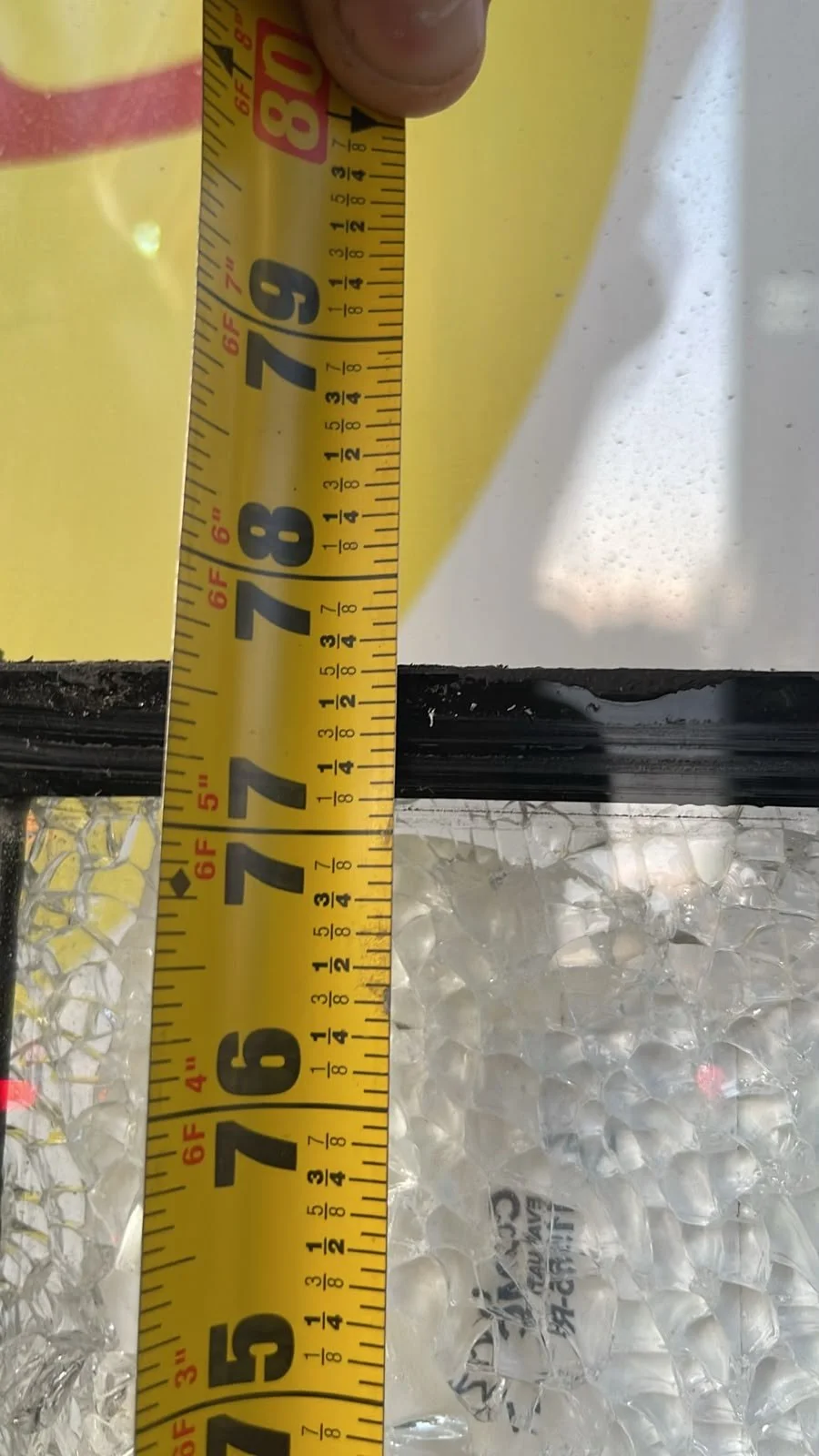
Tape measure alongside a damaged glazing opening, shared on our Google Business Profile.
Read project descriptions and original customer feedback about door, window and glass work.
View project descriptionsExplore repair options for doors, windows and glass. Explore our services.
How it works
Call or send the details. Photos are helpful, but optional.
We assess the job on site. You approve the price before paid work starts.
We secure unsafe openings and arrange the agreed repair or installation.
An itemised invoice describing the work.
Door, window and glass work for homes and businesses. Insured, WSIB Covered and available 24/7.
Insurance claims
After a break-in or property damage, we help with paperwork describing the damage and repair.
Coverage and reimbursement depend on your policy and your insurer's approval.
How we help with your claimService areas
Residential and commercial service across Toronto, Peel, York, Durham and Halton, plus Hamilton, Barrie and nearby communities.
FAQ
If yours is not here, call and ask. We would rather answer it now than have you guess.
Not automatically. The glazing, panel frame and wider assembly need assessment. A made-to-fit glass replacement may retain serviceable components, while other damage can require more work. We identify what is usable and explain the options rather than assuming every broken pane requires complete door replacement.
Do not operate a panel with unstable or badly damaged glazing to test it. Keep people clear of loose remnants and debris in the track or around the opening. The technician assesses the remaining glass and support. Photos are useful only when they can be taken safely.
No. The replacement needs confirmed dimensions and construction details appropriate to the actual panel. Edges hidden within the frame and overall insulated-unit thickness can matter. Approximate dimensions help prepare for assessment, but photographs and exposed-pane measurements alone are not the fabrication specification.
Not necessarily. Rollers, support, track condition and alignment can cause operating problems separate from the glazing. Tell us if the door dragged before the damage or now needs lifting to latch. The scope should distinguish glass replacement from any mechanical repair needed to restore normal movement.
Yes. Identify which panel is damaged and show the whole assembly when safe. The glazing and retaining arrangement may differ between fixed and moving panels. We assess the actual construction, frame condition and access before confirming what can be retained and which replacement details are needed.
The moisture location needs assessment. Surface condensation is different from persistent moisture or deposits between panes of an insulated unit. Tell us when it appears without dismantling the panel or leaning outside to check. Other seals or water-entry conditions may also need separate attention.
No. Do not attempt to cut, drill or resize a tempered panel. Where tempered glazing is selected, confirmed dimensions and required features belong in the fabrication plan before heat treatment. We assess the opening and discuss the appropriate replacement product rather than adapting unknown safety glass on site.
Temporary securing may be appropriate after the damage, support and access are assessed. Discuss how people will use the property and what restrictions remain. The fabricated replacement follows its confirmed specification and supplier schedule. Report changes in the temporary protection instead of removing or adapting it yourself.
Tell us the floor level, access from both sides, available space and property-management arrangements. Those conditions affect the working plan and handling. Do not lean outside or move damaged glazing to prepare. The assessment establishes the access and equipment required for the agreed replacement.
The handover identifies the glazing, panel-frame and retaining-system work completed, operating checks within the agreed scope and any remaining hardware tasks. Keep the work record available. Report new damage, movement or water entry rather than adjusting the panel. Any unfinished repair or access restriction should be clearly explained.
Call and describe it, or send the details through the form.


